


High Grade Counterfeit Money
Add a review FollowOverview
-
Founded Date July 1, 2013
-
Sectors Education Training
-
Posted Jobs 0
-
Viewed

Company Description
5 Killer Quora Answers To High Quality Counterfeit Money
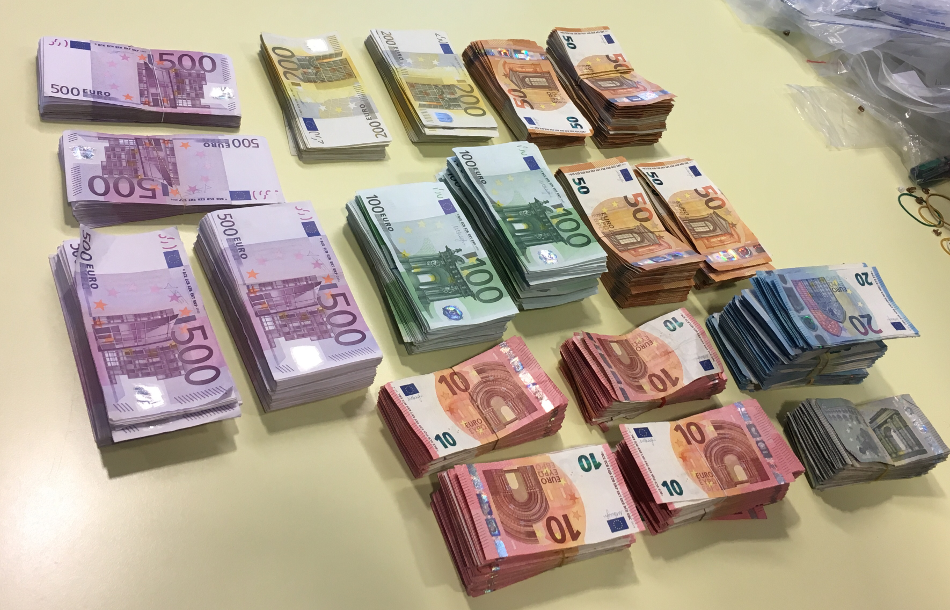
Understanding High-Quality Counterfeit Money: A Comprehensive Overview
Counterfeit money has actually long been a concern for economies worldwide. While the simple reference of Best Fake Money Online currency may stimulate images of criminal activities and underground operations, the reality of premium counterfeit money is even more intricate and concerning. This article aims to notify readers about the qualities of premium counterfeit money, its ramifications, techniques of detection, and preventive steps, along with answering some often asked concerns.
What is High-Quality Counterfeit Money?
High-quality counterfeit money describes fake currency that closely simulates legal tender, making it challenging for both the general public and even specialists to determine. Unlike basic fakes that might look significantly abnormal, top quality fakes employ sophisticated techniques to duplicate the intricate designs, textures, and functions of genuine banknotes.
Table 1: Characteristics of High-Quality Counterfeit Money vs. Genuine Currency
| Function | Top Quality Counterfeit Money | Genuine Currency |
|---|---|---|
| Paper Quality | Comparable to genuine bills (cotton/lint mix) | Made from a special polymer or cotton-linen hybrid |
| Printing Technique | Advanced printing techniques (e.g., balance out printing) | Intaglio printing for brilliant colors and textures |
| Watermarks | May feature fundamental watermarks, however often poorly carried out | Genuine watermarks visible when held to the light |
| Security Thread | Utilizes a visible, however frequently badly incorporated, thread | Embedded security thread that alters color |
| Holograms | Can simulate holographic elements inadequately | Authentic holograms with dynamic images |
| Microprinting | May include some microprinting, typically illegible | Clear, legible microprinting that can be examined under zoom |
| Serial Numbers | Randomly created, not consecutive | Special, sequentially printed numbers |
The Evolution of Counterfeit Techniques
Counterfeiters continually evolve their methods to stay ahead of detection innovations. Historically, counterfeiters utilized primary techniques involving fundamental printing methods and low-quality paper. However, advancements in printing technology, consisting of digital printing and high-resolution scanners, have provided rise to increasingly persuading replicas.
Significant developments in counterfeit methods include:
-
Digital Printing: The capability to use high-end printers has made it simpler to replicate the intricate information of banknotes.
-
3D Printing: Emerging innovations enable counterfeiters to print physical reproductions that may have formerly been impossible with traditional techniques.
-
Color Shifting Ink: Some counterfeiters have actually effectively produced inks that change color, mimicking genuine security features, though they are typically less effective.
-
Online Tutorials: The rise of the internet has caused a boost in offered info about counterfeit techniques, making it much easier for individuals to discover how to produce fake currency.
Table 2: Tools and Technologies Used in Counterfeiting
| Tool/Technology | Description |
|---|---|
| High-Resolution Scanners | Capture in-depth pictures of currency notes |
| Digital Printers | Produce top quality reproductions quickly |
| Laminating Devices | Produce synthetic notes with a plastic finishing |
| InkJet Printers | Utilized for printing complex styles and colors |
| Software application | Design software for producing design templates |
The Economic Implications of High-Quality Counterfeit Money
High-quality counterfeit currency presents considerable hazards not only to individual services but also to the wider economy.
-
Inflation: A boost in counterfeit money can dilute the value of real currency, leading to inflationary pressures.
-
Loss of Consumer Confidence: If counterfeit money infiltrates the economy, customer self-confidence in the currency decreases, prompting a shift towards alternative types of payment.
-
Effect On Law Enforcement: Resources should be diverted towards investigating counterfeiting operations, pulling attention from other types of crime.
-
Damage to Businesses: Retailers and small organizations often bear the brunt of accepting counterfeit notes, leading to significant financial losses.
Identifying High-Quality Counterfeit Money
Identifying High Quality Counterfeit Money-quality counterfeit money requires watchfulness and often a trained eye. Here are some methods that can help individuals and organizations recognize counterfeit currency:
-
Feel: Genuine banknotes have a distinct texture due to the materials used. Feel the bill for the common raised printing.
-
Look: Hold the costs to the light to examine for watermarks and security threads.
-
Tilt: Check for color-shifting ink and holographic features. Authentic bills will demonstrate these aspects dynamically when seen from various angles.
-
Use a Counterfeit Detector: Many businesses Buy Counterfeit Money With Bitcoin counterfeit detection technology, such as UV light detectors and magnifying gadgets.
Table 3: Methods for Detecting Counterfeit Money
| Method | Description |
|---|---|
| Light Test | Check watermarks and ingrained threads using light |
| Magnification | Check microprinting and details under a magnifying glass |
| Ultraviolet Light | Use UV light to expose concealed security functions |
| Color Test | Observe color-shifting inks and holographic components |
Preventive Measures Against Counterfeiting
Avoiding the spread of counterfeit currency requires a multi-faceted approach. Here are some techniques services and individuals can adopt:
-
Training Staff: Regularly train workers on how to identify counterfeit money.
-
Implementing Technology: Invest in counterfeit detection tools that can quickly identify fake bills.
-
Expecting Suspicious Behavior: Be alert for individuals who may appear worried or excessively insistent on using cash.
-
Educating Customers: Provide information to clients on how they can determine counterfeit money.
Often Asked Questions (FAQ)
Q1: Is it unlawful to possess counterfeit money if I didn’t create it?
A1: Yes, possessing counterfeit money is illegal, regardless of whether you printed it or not. Law enforcement treats it as a serious criminal activity.
Q2: How can I report counterfeit money?
A2: You can report Counterfeit Cash For Sale currency to the regional cops department or the U.S. Secret Service (in the United States). They have specific procedures for dealing with such cases.
Q3: Are there distinctions in counterfeiting approaches in between different currencies?
A3: Yes, different currencies use varying security features, which means that counterfeiting techniques may vary in elegance and approach depending upon the target currency.
Q4: What are the charges for counterfeiting money?
A4: Penalties for counterfeiting can include large fines and long jail sentences, depending upon the jurisdiction and severity of the offense.
Q5: Can organizations be compensated for losses associated with counterfeit money?
A5: In lots of cases, organizations may not receive reimbursement for losses associated with counterfeit currency. However, some insurance coverage may offer coverage depending on the situations.
The concern of premium counterfeit money is a complex issue that impacts economies, organizations, and consumers alike. Awareness, education, and advanced detection approaches are important in combating this growing danger. By understanding the attributes of counterfeit bills and using effective strategies for detection and prevention, the effect can be reduced, safeguarding the integrity of the currency and the economy.
